

RETAIL STORE CASES · QIANCHENG FURNITURE
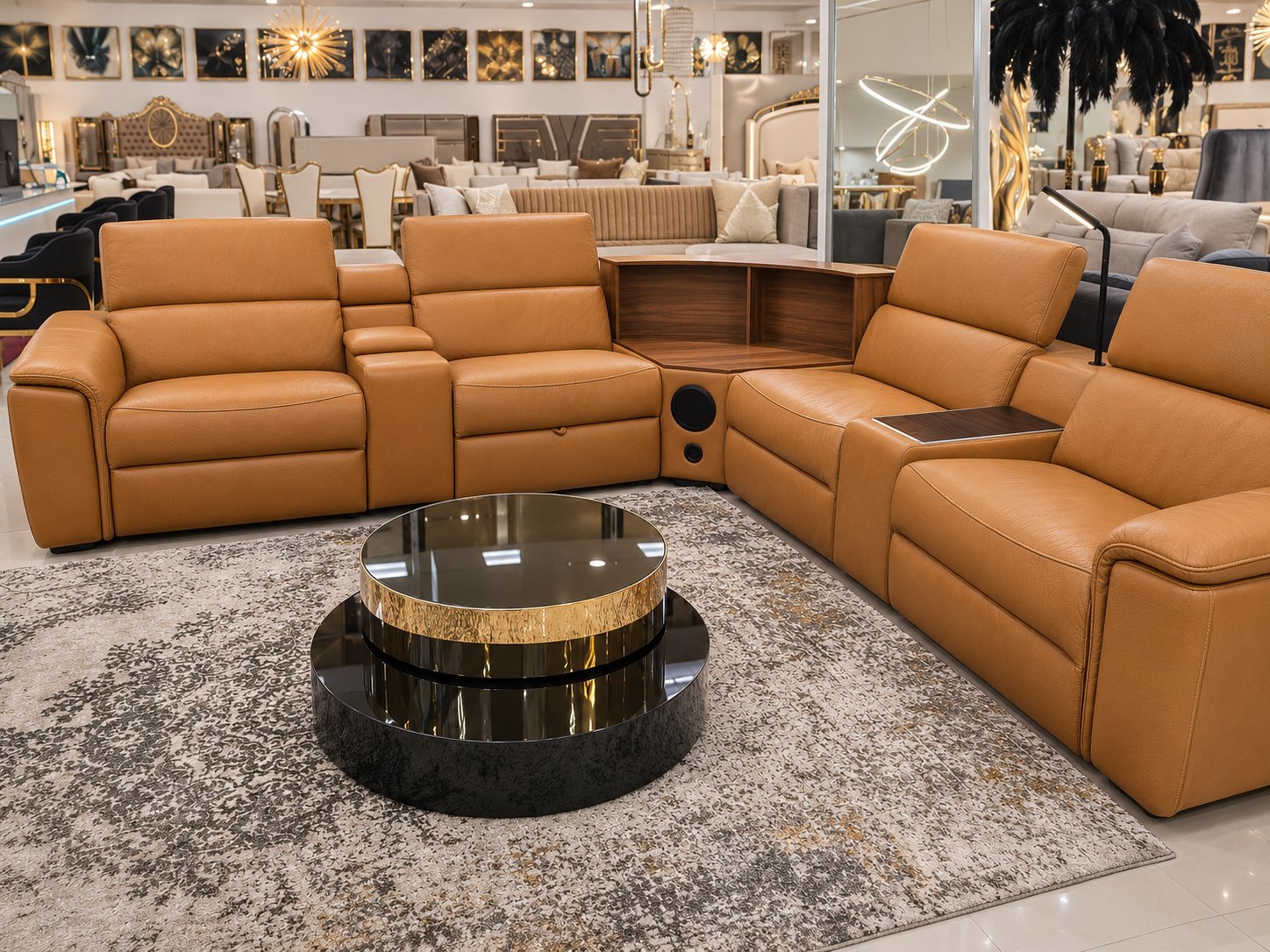
Look at the center of this showroom photo first. The round, stepped coffee table holds its own against a large cognac-colored seating arrangement. Its black reflective surfaces ground the warm upholstery, while a gold-tone textured band picks up the metallic details elsewhere in the space. Sometimes one strong accent is enough.
Use contrast to create a clear focal point
When a room already contains a lot of furniture, you do not need another oversized piece shouting for attention. A compact round silhouette breaks up the long lines of the seating. The black-and-gold finish creates a clear contrast with the tan upholstery and patterned rug. Notice how the table reads as a separate product even inside a complete living-room setting.
Think about complementary sales
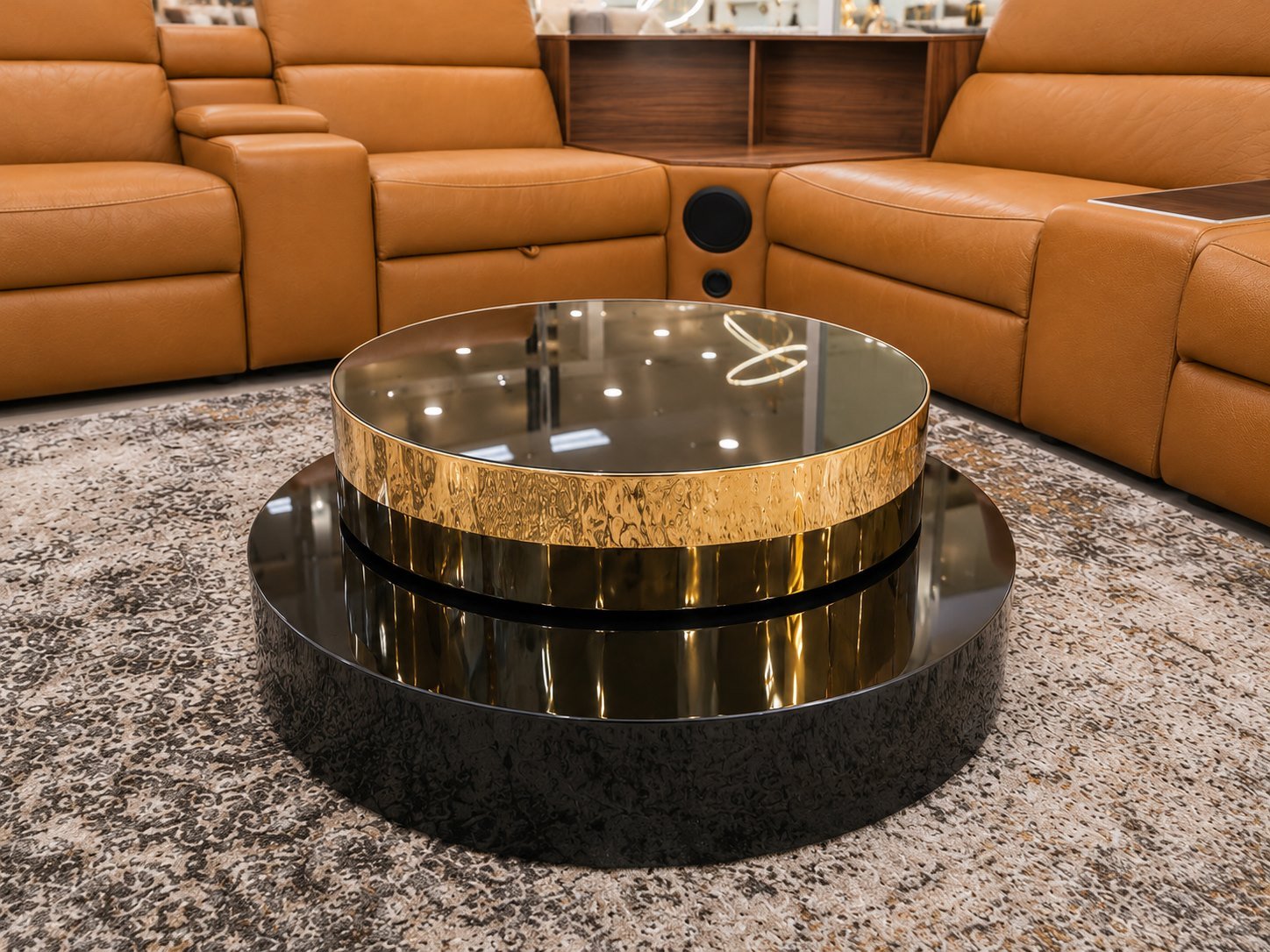
For retailers, a coffee table is a useful accessory category because it can sit beside existing seating collections. Customers can buy the whole look or choose a single piece to update their room. Start with a few distinct shapes and finish combinations, and track which ones sell with your existing furniture. That is more useful than filling the floor with near-identical designs simply to offer variety.
Keep specifications and expectations clear
The photograph shows a reflective top and a textured gold-tone rim. Confirm the actual surface material, dimensions, weight, frame and finish before you order. Discuss packaging protection for polished surfaces and make sure your team has clear cleaning guidance. The seating in the image provides display context; the coffee table is the focus of this project.
Find the right accent table for your range
Tell Qiancheng Furniture which seating collections your store already carries, what table sizes your customers ask for and where your retail price needs to sit. We can discuss coffee and side table options and prepare a quote for the assortment that makes sense for you.