

In the furniture industry, growth depends on more than product quality alone. Even when a business offers stylish designs, durable materials, and competitive pricing, it can still lose customers because of slow replies, missed follow-ups, or unorganized order handling.
This is especially true for businesses selling home, office, commercial, or stainless steel furniture, where buyers often need product details, custom quotations, delivery timelines, and post-sale support before making a final decision. When inquiries start coming from multiple channels, managing each customer manually becomes difficult and inefficient.
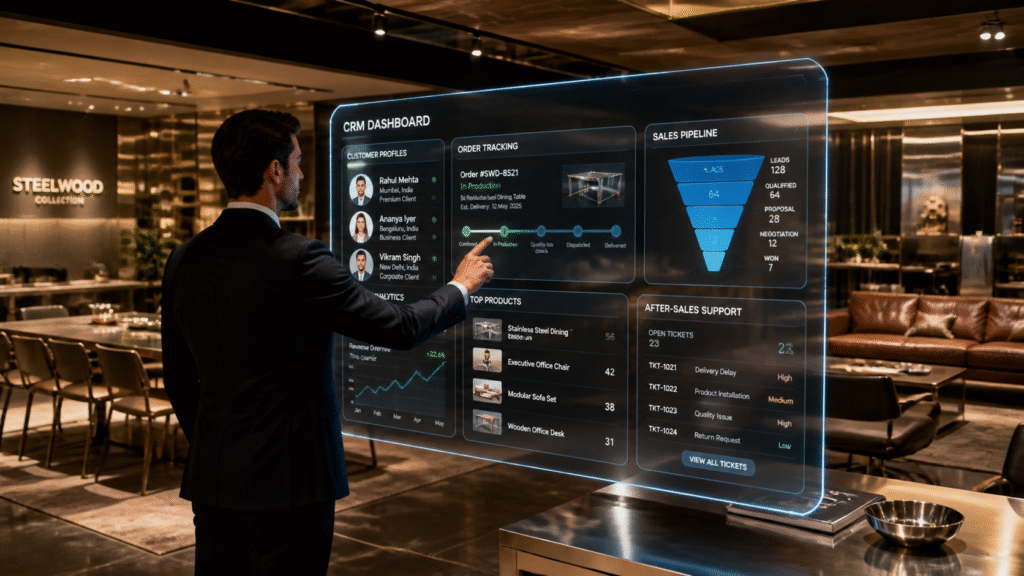
That is where CRM software becomes valuable. A customer relationship management system helps furniture businesses organize leads, track conversations, manage orders, and improve after-sales service in one place.
Why furniture businesses need a CRM
Many furniture businesses still rely on spreadsheets, notebooks, inbox searches, or chat apps to manage customer communication. That may work for a very small operation, but it usually becomes a problem once the business starts receiving more inquiries from websites, social media, marketplaces, and referrals.
A typical furniture sales process includes several moving parts. A customer may ask about size, material, finish, pricing, customization, stock availability, delivery location, and installation support. If that information is scattered across email threads and phone calls, the chances of delay or error increase quickly.
A CRM creates a central system for handling all of this. Instead of depending on memory, sales teams can see the full history of every lead and customer in one dashboard.
Better lead management
Furniture companies often lose sales not because the product is weak, but because the follow-up process is weak. A customer may ask for a quote today, compare options tomorrow, and buy from the business that responds first and follows up best.
With a CRM, businesses can capture inquiries from different channels and keep them organized. Sales staff can assign leads, mark their stage in the buying journey, add notes about product interest, and schedule the next action without confusion.
This is especially helpful for furniture sellers offering multiple categories, such as home furniture, office furniture, hospitality furniture, or stainless steel product lines. When customer requests are categorized properly, the team can respond faster and recommend more relevant products.
Smoother quotation and order handling
Quotations are a major part of furniture sales, especially for bulk buyers, office buyers, interior project clients, and custom-order customers. Small mistakes in pricing, measurements, finish details, or delivery commitments can damage trust and reduce conversions.
CRM software helps furniture businesses create a more controlled sales workflow. Teams can store product preferences, quote history, negotiation notes, and delivery requirements under one customer record.
This makes it easier to answer questions like:
- Which products did the customer ask about?
- What price was offered last time?
- Was customization requested?
- Who on the sales team handled the deal?
- What was promised regarding delivery or installation?
When that information is instantly available, the business looks more professional and dependable.
Stronger customer communication
One of the biggest challenges in furniture sales is maintaining consistent communication. Customers often take time to decide, especially for larger purchases, commercial setups, or customized furniture orders.
A CRM helps businesses stay connected without becoming disorganized. Sales teams can set reminders for callbacks, follow up on pending quotes, send updates about stock or delivery, and keep a record of every interaction.
This is important because many sales are lost simply due to silence. If a business forgets to reply, forgets to follow up, or cannot remember the customer’s last request, the customer may move to a competitor.
Consistent communication builds trust. In furniture sales, trust often matters as much as price.
Better after-sales support
The customer journey does not end when the payment is made. After-sales support plays a big role in whether a buyer becomes a repeat customer or a one-time customer.
Furniture buyers may come back with questions about delivery, installation, replacement parts, maintenance, warranty support, or future orders. Without a system, support teams may struggle to locate order details or previous conversations.
A CRM improves this process by keeping order history and customer records connected. That allows the team to respond faster, solve problems more accurately, and create a better ownership experience for the buyer.
For furniture businesses, this can also lead to more referrals and repeat purchases. A satisfied customer who receives good support is much more likely to recommend the brand or return for another order.
Helpful for repeat sales and referrals
Many furniture businesses focus heavily on getting new customers, but long-term growth often comes from existing ones. A past buyer may return for matching products, another room setup, office expansion, or project referrals.
CRM software helps businesses stay in touch with previous customers in a structured way. Teams can track purchase history, note buyer preferences, and identify when it makes sense to reach out again.
For example, a business can follow up after delivery, ask for feedback, share new product arrivals, or reconnect with commercial buyers when they may need another order. These small touchpoints can generate strong repeat business over time.
Useful for both retail and B2B furniture sellers
CRM is not only for large corporations. It is useful for local furniture showrooms, growing eCommerce sellers, office furniture suppliers, custom furniture makers, and B2B wholesale businesses.
For retail-focused businesses, CRM helps track walk-in leads, online inquiries, and repeat customer behavior. For B2B furniture suppliers, it helps manage longer sales cycles, bulk quotations, procurement contacts, and ongoing account relationships.
This makes CRM a practical system for nearly every type of furniture brand. Whether the business sells direct to homeowners or works with offices, hotels, restaurants, schools, or institutions, organized customer management improves performance.
What features matter most
Not every CRM is equally useful for furniture businesses. The best option depends on sales process, team size, and whether the business focuses on retail, projects, or wholesale.
In general, furniture businesses should look for features such as:
- Lead and contact management
- Sales pipeline tracking
- Quotation history
- Task reminders and follow-ups
- Team notes and collaboration
- Customer service records
- Purchase history tracking
- Reporting and performance dashboards
For businesses comparing options, a platform like TheGreatCRM can help review useful CRM features, compare solutions, and understand which systems are a better fit for sales-driven companies in growing industries.
Why CRM becomes more important as the business grows
As a furniture business expands, manual management becomes harder. More products, more inquiries, more staff, and more customer expectations create more room for delay and miscommunication.
A CRM gives structure to that growth. It helps teams work with a clear process instead of depending on scattered records and individual memory.
That structure supports better conversion rates, cleaner communication, and stronger retention. In a competitive furniture market, these operational advantages can have a direct impact on revenue.
Final thoughts
Furniture businesses succeed when they combine quality products with reliable customer management. A CRM helps make that possible by organizing leads, simplifying quotations, improving follow-ups, and strengthening after-sales service.
For brands that want to manage customers more efficiently and grow repeat business, adopting the right CRM system can be a smart next step. Businesses exploring suitable tools can review options and insights through TheGreatCRM, a resource focused on helping companies choose the right CRM for their needs.


.jpg)