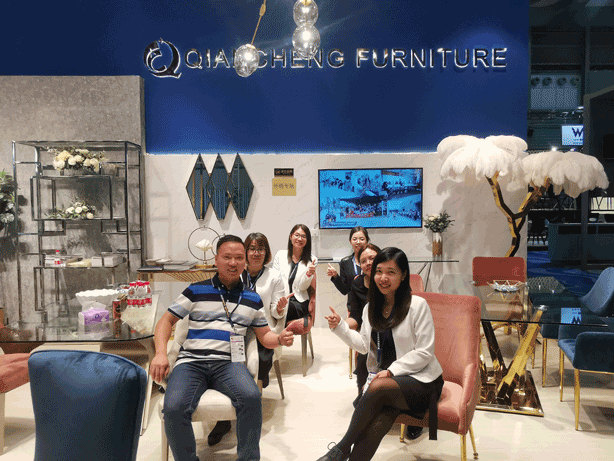


The right dining furniture for retailers earns its place twice: it attracts a customer on the showroom floor and converts into a sale that leaves enough margin after delivery and service. Start with the homes, budgets and buying occasions in your market. Then select tables, chairs and combinations that make those choices easy.
THE RETAIL DECISION
Give every display a clear role: everyday family dining, adaptable space or a statement purchase. Buy depth in proven sellers, test new looks in smaller commitments, and measure gross profit against the floor space and cash each display uses.
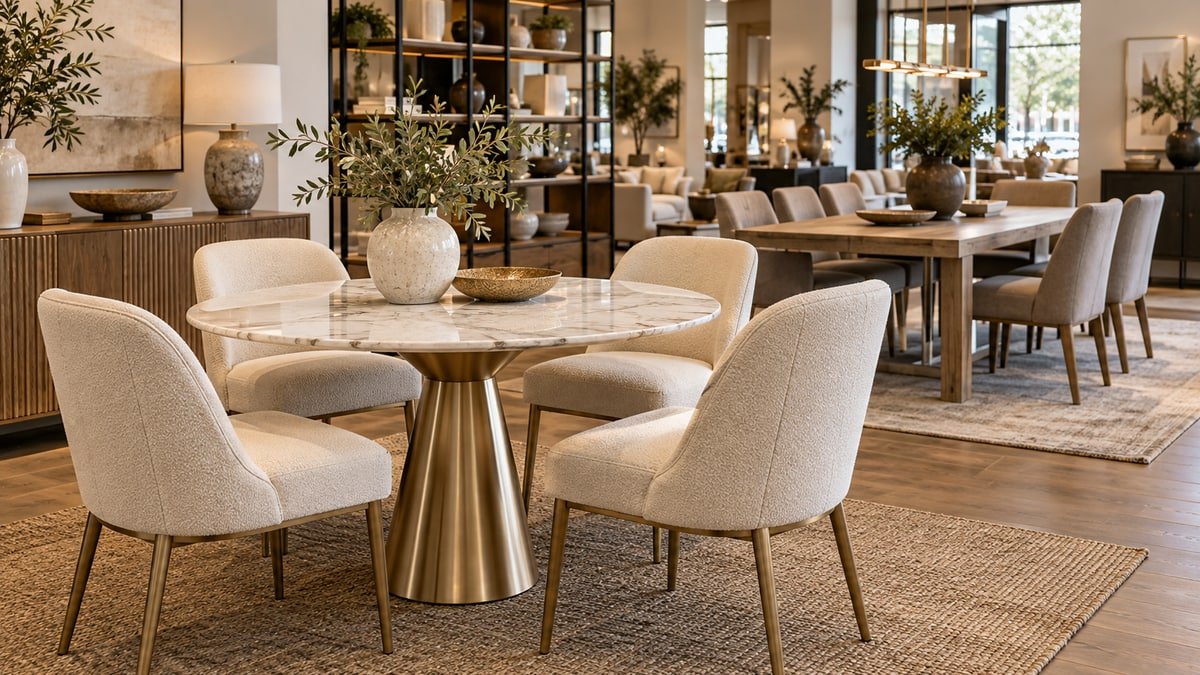
1. Start with the Homes Your Customers Have
A dramatic table can attract attention and still be the wrong stock investment if most visitors cannot fit it into their homes. Review recent sales, enquiries that did not convert and return reasons before deciding the next display. Look for recurring constraints: narrow rooms, occasional guests, a need for easier-care seating or a fixed family budget.
Define two or three customer situations in language your sales team actually hears. “We want to seat guests without losing everyday space” is a better buying brief than “we need more modern tables.” It points to a demonstrable benefit and helps staff explain why one product costs more than another.
2. Build a Mix with Distinct Jobs
| Assortment role | What the display should prove |
|---|---|
| Everyday dining | A fixed table and comfortable chairs that suit the room sizes and price band of your main customer group. This is a candidate for deeper stock once sales justify it. |
| Flexible entertaining | An extendable option where customers need more seats occasionally. Demonstrate both sizes and how the extension is operated; confirm the current model and dimensions before ordering. |
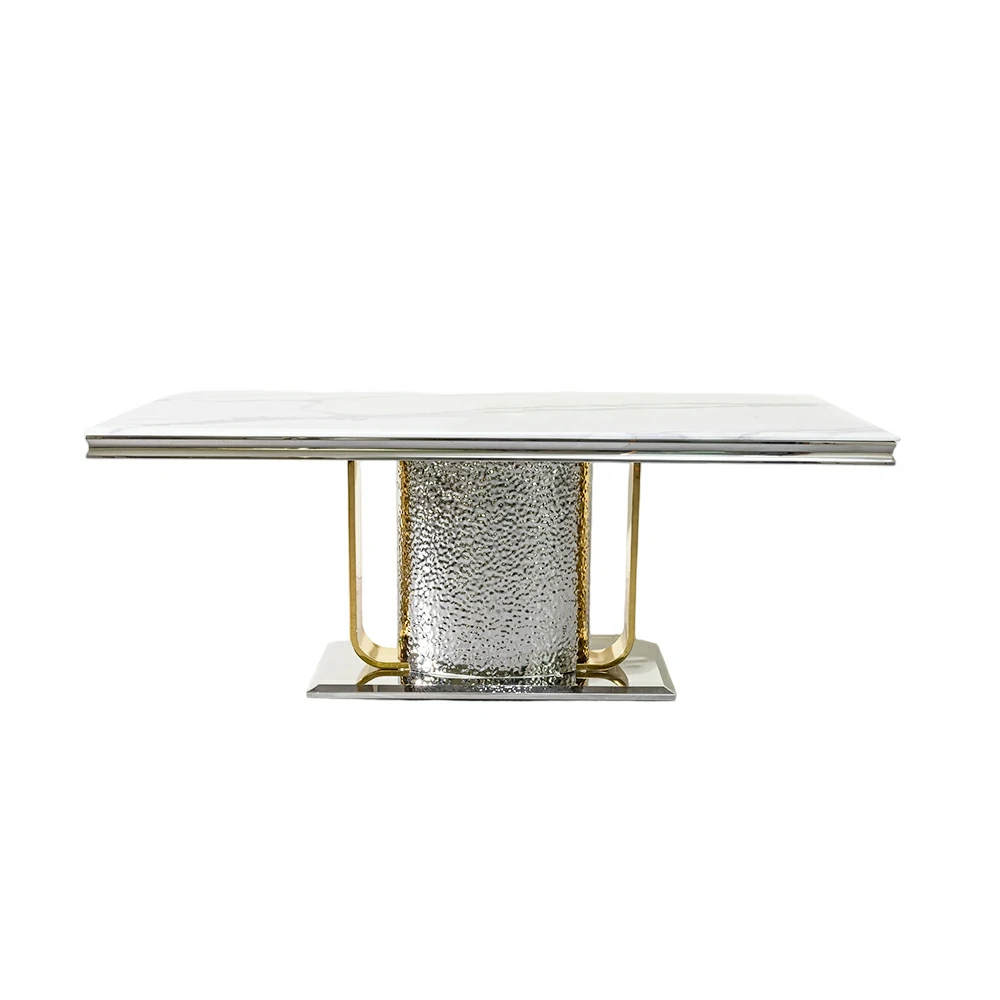
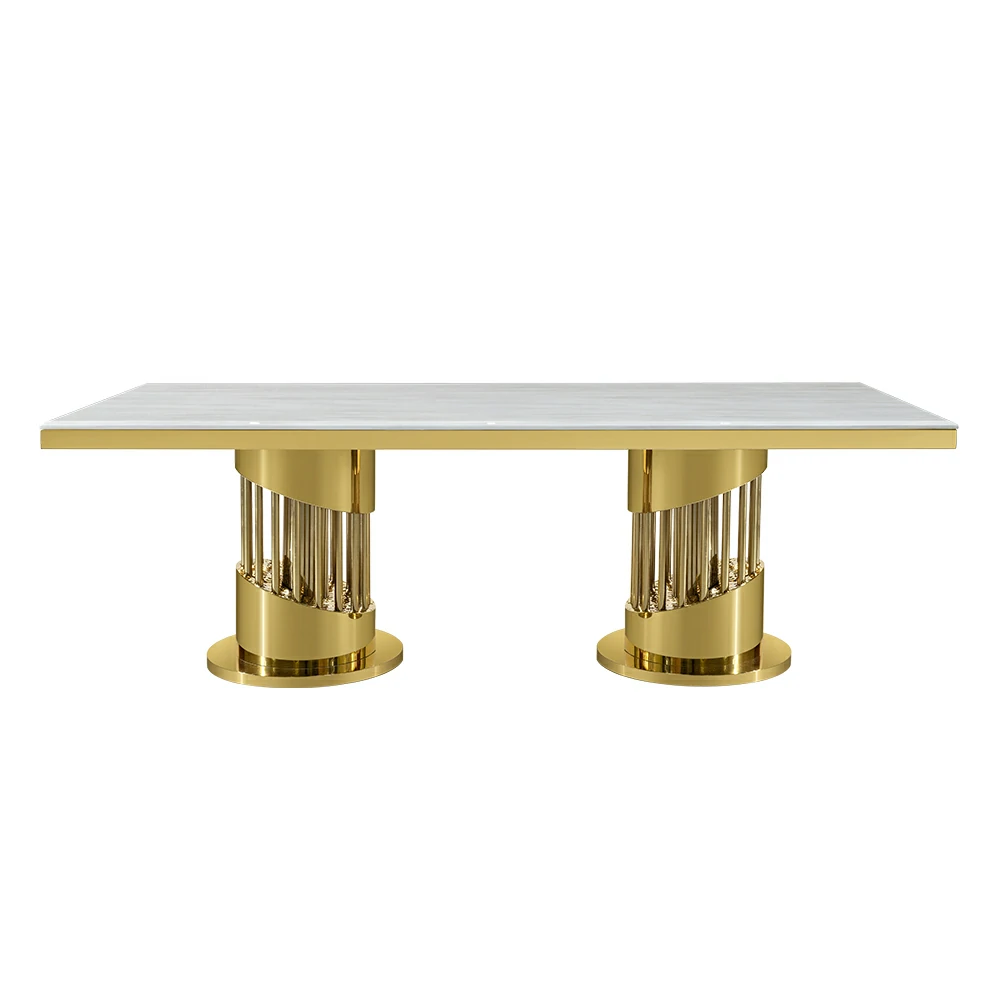
| Statement purchase | A distinctive base, proportion or finish that creates a clear step up. Use it to support premium selling without filling the warehouse with unproven variants. |
| Chair upgrade | A chair pairing that adds comfort or a different visual character to an existing table display. Keep the difference easy to explain. |
Sell a Complete Combination, Not Two Separate Decisions
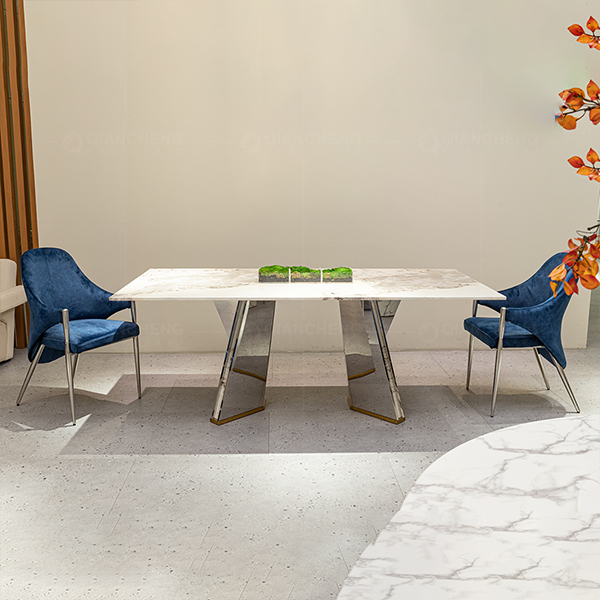
A table that looks right with one chair may feel cramped with another. Check seat width, arm clearance, leg positions and the space needed to pull a chair out. Let shoppers sit at the actual combination. A convincing photograph cannot tell them whether the chair arms will fit underneath.
Offer a clear default pairing and a purposeful alternative—for example, an armless option for a tighter arrangement or an upholstered armchair for longer meals. More chair colours are useful only when customers value the choice enough to justify the extra stock.
3. Make Floor Space and Stock Work Harder
Measure the contribution of a display, not just its ticket price. Review realised gross profit over a consistent period alongside the display area, orders generated, average discount and stock held. A premium set with a large margin per sale may still underperform a smaller display that converts more often.
- Protect cash: separate a display sample, normal replenishment stock and customer-order options. Do not treat every finish as a stock item.
- Reduce markdown exposure: give new designs a review date and an agreed test quantity. Expand depth only after enquiries become orders.
- Reduce avoidable returns: show dimensions, seating fit and realistic care guidance before purchase. Record why returns occur so the next assortment solves the cause.
- Keep price steps credible: explain what the shopper gains at each level—space flexibility, seating comfort or a distinctive design—rather than listing materials without context.
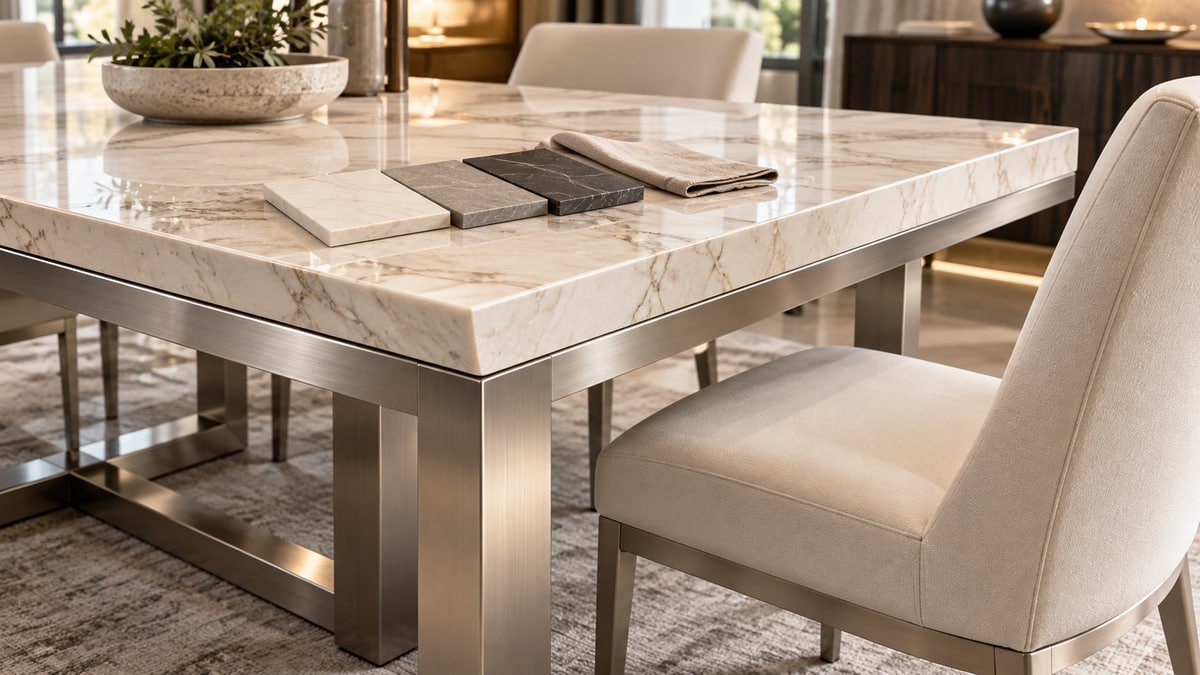
4. Use Qiancheng Products as Assortment Starting Points
The Qiancheng 894 round table is listed at 150 cm diameter and 76 cm high. It provides a concrete round-table reference for a display plan. Check the footprint with your chosen chairs; a round shape alone does not make a table suitable for a small room.
For a larger statement setting, Qiancheng 2656 is listed as a 200 cm rectangular table. Compare its role with the round display: it should serve a different room or buying occasion, rather than duplicate the same customer decision. These are catalogue examples for selection, not claimed store sales results.
Browse the dining chair collection for candidate pairings. Qiancheng’s retail and after-sales support includes product photos and videos, installation guidance and maintenance information. Request assets for the exact models and finishes you plan to sell so staff and online listings present the same product.
This support has a practical role: clearer visuals help customers shortlist, assembly guidance supports the delivery team, and care information sets expectations after the sale. Confirm what is available for your selection before launching the collection.
5. Retail Assortment Questions
How many dining sets should a furniture store carry?
There is no useful universal number. Start with the customer needs and price bands you can cover clearly within your display space and buying budget. Several near-identical sets may offer less choice than a smaller range with distinct roles.
Should I choose round, rectangular or extendable tables?
Choose by the homes and occasions your customers describe. Compare actual dimensions and chair clearance. An extendable model addresses changing seating needs; a fixed model can provide a simpler everyday proposition. Keep a premium statement design only if its audience is clear.
How can I improve margin without simply raising prices?
Make the value difference visible, reduce unnecessary discounting and limit slow-moving variants. Track returns, delivery problems and markdowns as well as the initial product margin. Product choice and the sales explanation should work together.
Once the assortment is chosen, use our container cost and delivery planning guide to assess an import order. If you supply a dealer network rather than individual store shoppers, see product range and channel planning.
Plan the Next Dining Display for Your Store
Send your store profile and price bands so Qiancheng can discuss a focused table-and-chair shortlist. Start with the customer need you want to serve, rather than a request for the entire catalogue.
- Country and store type
- Customer profile and typical dining-room size
- Target retail price bands
- Display space and number of dining displays
- Preferred table shapes and chair styles
- Initial buying budget or quantities
Send My Store Assortment Brief →
Opens an email draft with the right questions already included. Prefer a web form? Use our contact form and start your message with Retail Store Assortment Brief.
Prepared by Qiancheng Furniture · Updated 22 October 2026. Linked product and service pages provide the reference details; the agreed quotation and approved order specification determine your supply terms.