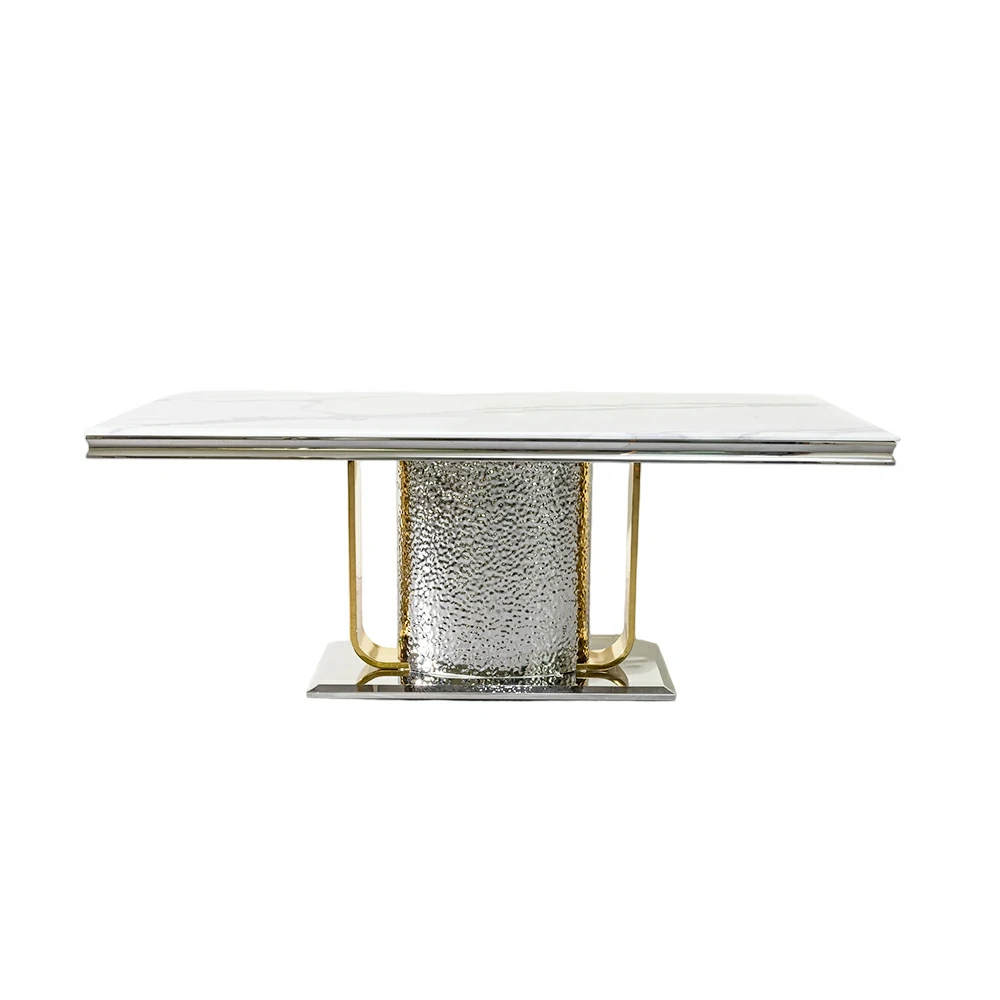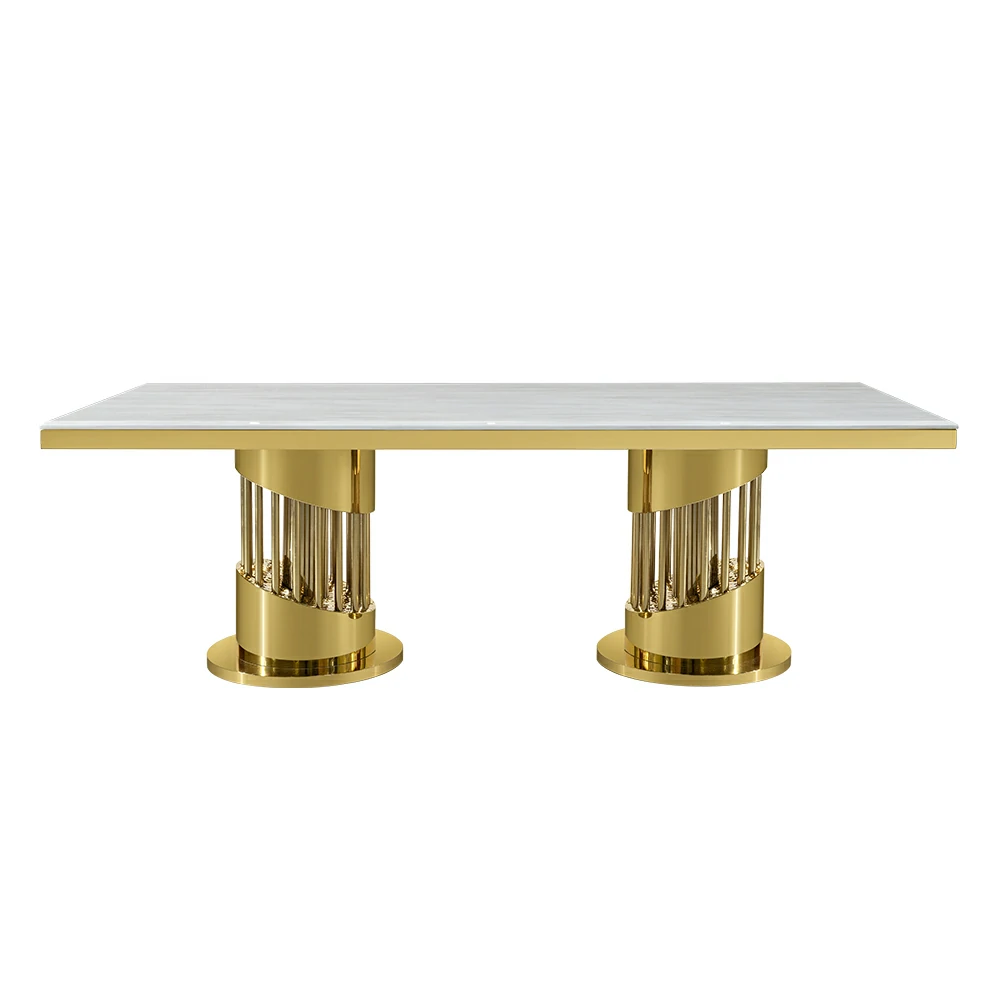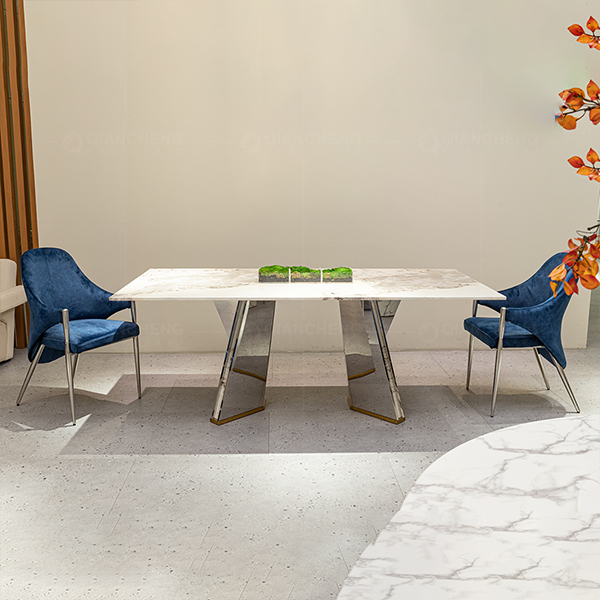


When buying wholesale dining furniture, compare the cost of saleable stock in your warehouse—not only the price on the factory quotation. Packed volume changes freight allocation. Damage changes the number of units available to sell. A late arrival can turn an attractive buying price into missed dealer orders and tied-up cash.
THE WHOLESALE DECISION
Use one agreed model mix to compare product cost, export packing, freight, destination charges and the warehouse arrival window. Keep estimates separate from confirmed quotations, and avoid counting a cost twice when it is already included in the agreed trade term.
1. Calculate the Cost per Saleable Unit
Build a landed-cost sheet with the supplier and forwarder responsibilities clearly separated. Depending on the quotation terms, include product value, packing charges, origin handling, international freight and insurance, import charges, destination handling and inland delivery. Check tax treatment and local charges with the relevant advisers rather than copying a rate from another importer.
Planning cost per saleable unit = total relevant shipment cost ÷ expected saleable units. For a mixed shipment, calculate each SKU separately and allocate shared costs using a stated basis. Carton volume is a useful planning basis for space-driven freight, while heavy or specially handled items may need a different allocation.
| Illustrative shipment | Planning amount |
|---|---|
| Product and agreed export packing | $45,000 |
| Freight, insurance and origin handling not already included | $5,000 |
| Destination charges and inland delivery allowance | $3,000 |
| Total planning cost | $53,000 |
| 100 identical sets received; 98 initially saleable | $540.82 per saleable set ($53,000 ÷ 98) |
This is a worked example, not a Qiancheng quotation or a damage-rate forecast. The allowance must be replaced with route-specific figures, including applicable import charges. At an illustrative net selling price of $800, the $540.82 planning cost leaves about 32.4% before selling expenses and overhead. It is not net profit. Repairs, claims or recovered stock would change the final result.
The lesson is commercial: a small factory-price saving can disappear when the order delivers fewer saleable units or requires extra handling. Compare packing alternatives by their effect on saleable stock, not by carton price alone.
2. Translate the Product List into Packed CBM
Packed CBM = outside carton length × width × height in metres × carton quantity. Use the finished package dimensions, including any crate. A tabletop and its base may travel in separate cartons; two chairs may share one carton. Count complete sellable units as well as packages.
| Example package | Volume |
|---|---|
| One tabletop carton: 2.00 × 1.00 × 0.12 m | 0.24 m³ |
| One base carton: 1.00 × 0.60 × 0.30 m | 0.18 m³ |
| Two chair cartons: 0.75 × 0.60 × 0.80 m each; two chairs per carton | 0.72 m³ for four chairs |
| One table plus four chairs | 1.14 m³; 20 sets total 22.8 m³ |
These dimensions are illustrative, not product specifications. The sum of carton volumes is not a guaranteed container loading quantity. Weight limits, stacking restrictions, door access, protective spacing and the arrangement of different cartons can reduce usable capacity. Ask for a loading plan based on the final packing list.
3. Choose a Container Mix That Can Turn Back into Cash
A full container is only useful if its contents match demand. Begin with confirmed dealer orders and proven stock lines. Add complementary chairs or tables where the assortment makes commercial sense; do not fill the last spaces with slow-moving models simply to improve the freight-per-cubic-metre calculation.
Compare two versions of the order: the most space-efficient mix and the mix supported by expected sales. Review contribution after delivery cost, weeks of stock and cash committed to each SKU. A modest amount of unused space may be preferable to months of unsold inventory.
For multi-carton tables, agree matching carton identifiers before shipment. If a warehouse cannot locate the correct base, an undamaged tabletop still cannot become a completed customer order. Clear carton mapping therefore protects both receiving time and available-to-sell stock.
4. Plan Backwards from the Warehouse Arrival Window
A production lead time is only one part of the delivery calendar. Work backwards from the date your warehouse needs stock and include final specification approval, production, inspection or correction time, booking and port cut-off, transit, clearance and inland delivery.
- Before deposit or order confirmation: agree which approval starts the production clock and which changes can restart it.
- Before a promotion: separate a factory-ready estimate from a confirmed sailing and from the warehouse appointment.
- Before loading: confirm the order is complete and identify any shortage that would leave tables or chair sets unsaleable.
- For cash planning: allow for the period between supplier payments, transport and collection from your own customers.
Ask for milestone updates at the points that affect your selling commitments. An early warning gives you time to adjust dealer allocations or promotions; an optimistic date with no dependencies does not.
5. What Qiancheng Can Support
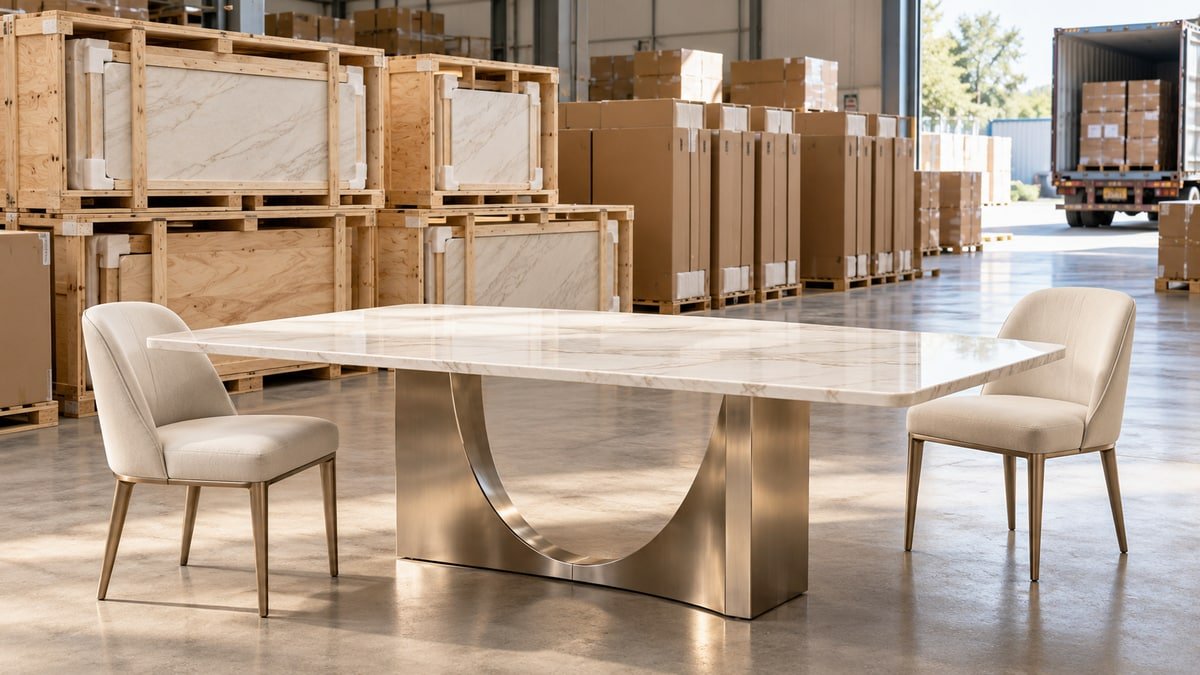
Qiancheng publishes standard, LCL and customised packing options, including additional protection for marble tops. The final package choice should match the route and handling pattern; request its measured carton dimensions and gross weights for your order.
The service process describes order-progress management, inspection reporting and container loading. Use these capabilities to request a model-by-model packing list, matching carton labels and agreed production checkpoints. Loading quantity and dispatch dates still need confirmation against the selected order.
A useful quotation response makes the assumptions visible: which packing is priced, which transport costs are included, what the proposed mix occupies and when production can be completed. That gives a wholesaler a decision sheet rather than an isolated unit price.
6. Container Planning Questions
How many dining sets fit into a container?
There is no reliable answer without the exact table and chair mix, finished carton sizes, gross weights and stacking rules. Calculate packed CBM first, then validate the physical loading plan. Do not use product dimensions as carton dimensions.
Is the lowest unit price the best wholesale offer?
Not necessarily. Compare the same scope delivered to the same place, then consider saleable quantity, stock demand and the payment-to-sale period. A cheaper item with poor sell-through or additional service cost may deliver less margin.
Can a catalogue lead time be used as my delivery promise?
No. Confirm the production start condition and planned completion date, then add route and destination milestones. A stated production range does not include every stage between factory and warehouse.
Still choosing the product mix? Start with dining tables, chairs and store assortment. For scheduled repeat supply across a dealer network, use the distributor range and replenishment guide.
Build a Model-Specific Container Cost Sheet
Send the proposed model mix and destination. Ask Qiancheng to separate the product quote, carton data, loading assumptions and production milestones so your forwarder can price the remaining route.
- Destination port and final warehouse location
- Models and quantities, including table-to-chair ratio
- Requested trade term and named place
- Container type or target order volume
- Required warehouse arrival window
- Packing or labelling requirements
Request a Container Cost Breakdown →
Opens an email draft with the right questions already included. Prefer a web form? Use our contact form and start your message with Wholesale Container Cost and Loading Brief.
Prepared by Qiancheng Furniture · Updated 22 October 2026. Linked product and service pages provide the reference details; the agreed quotation and approved order specification determine your supply terms.